Free SSL vs Paid SSL: Which One Do You Need?
Confused between free SSL and paid SSL certificates? Compare their security, features, validation, pricing and benefits to choose the right SSL certificate for your website.
Zonetic Hosting Team
Blogger & SEO Expert
In this article
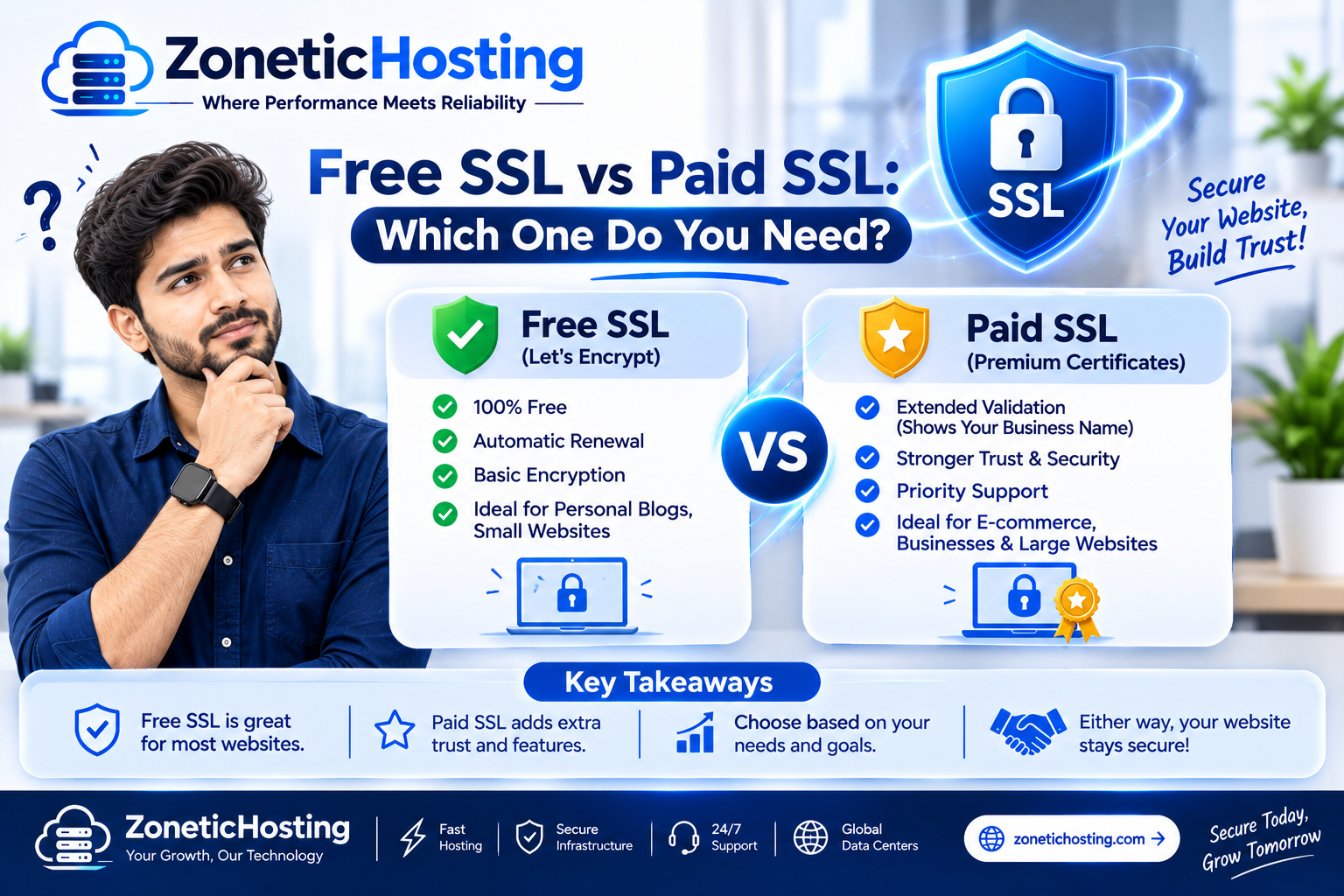
Website security is essential for every business, blog, ecommerce store and online application. One of the first steps towards securing a website is installing an SSL certificate. However, many website owners get confused when comparing free SSL vs paid SSL certificates. Are free SSL certificates secure enough? Is a paid SSL certificate worth the additional cost? In this guide, we will explain the differences between free and paid SSL certificates, their features, security benefits and costs to help you choose the right option for your website.
What Is an SSL Certificate?
An SSL certificate is a digital certificate that enables encrypted communication between a visitor's browser and your website. Modern websites use TLS (Transport Layer Security), although the term SSL is still commonly used.
When a website has a properly configured SSL certificate, its URL uses HTTPS instead of HTTP. Visitors can also see a padlock or site information indicator in their browser, depending on the browser interface.
SSL/TLS helps protect information exchanged between users and websites, including:
- Login credentials and passwords.
- Contact form submissions.
- Personal information.
- Account-related information.
- Other data transmitted through your website.
For business websites, SSL is an important part of maintaining customer trust and protecting online communication.
What Is a Free SSL Certificate?
A free SSL certificate provides HTTPS encryption without requiring a certificate purchase. One popular example is Let's Encrypt, which provides free domain-validated certificates through an automated certificate authority.
Free SSL certificates are commonly used by:
- Personal blogs and portfolio websites.
- Small business websites.
- Startup websites.
- Developer projects and testing environments.
- Informational websites.
Benefits of Free SSL
- No certificate purchase cost: You can enable HTTPS without buying a paid certificate.
- Strong encryption: Properly issued free SSL certificates provide modern TLS encryption.
- HTTPS support: Helps secure communication between browsers and your website.
- Easy automation: Many hosting platforms support automatic SSL installation and renewal.
- Suitable for most websites: A domain-validated free SSL is sufficient for many personal and business websites.
Limitations of Free SSL
- Typically offers domain validation rather than organisation validation.
- Certificates generally have shorter validity periods and need regular renewal.
- Usually does not include additional paid support or business warranties.
- Does not independently verify the legal identity of a business.
What Is a Paid SSL Certificate?
A paid SSL certificate is purchased from a commercial certificate authority or reseller. Depending on the product, it may provide additional validation options, customer support, warranties and business-oriented features.
Paid SSL certificates are commonly considered by:
- Established businesses and organisations.
- Large ecommerce websites.
- Financial and professional service providers.
- Companies requiring organisation identity verification.
- Businesses with specific security or compliance requirements.
Benefits of Paid SSL
- Additional validation options: Some certificates support Organisation Validation (OV) or Extended Validation (EV).
- Business identity verification: OV and EV certificates involve additional checks of the organisation's identity.
- Customer support: Commercial providers may offer assistance with installation and certificate management.
- Warranty options: Some products include a limited certificate warranty subject to their terms and conditions.
- Business requirements: Certain organisations may require specific certificate types or validation procedures.
Free SSL vs Paid SSL: Key Differences
Here is a comparison of the main differences between free and paid SSL certificates.
| Feature | Free SSL | Paid SSL |
|---|---|---|
| Purchase Cost | Free | Paid |
| HTTPS Encryption | Yes | Yes |
| Domain Validation | Yes | Yes |
| Organisation Validation | Generally not included | Available with OV products |
| Extended Validation | No | Available with EV products |
| Warranty | Generally not included | Available with some products |
| Technical Support | Community or hosting support | May include provider support |
| Encryption | Modern TLS encryption | Modern TLS encryption |
| Suitable For | Blogs, startups and most websites | Businesses with additional validation requirements |
Important: A paid SSL certificate does not automatically provide stronger encryption than a free SSL certificate. Both can provide secure TLS connections when properly configured. The main differences are generally validation, support, warranty and additional business features.
Is Free SSL Secure Enough for a Business Website?
Yes. For most standard business websites, a properly installed and maintained free SSL certificate is sufficient to enable HTTPS and encrypt data transmitted between visitors and the website.
For example, if you operate a company website containing service pages, contact forms, business information and blog articles, a free domain-validated SSL certificate can provide the encryption you need.
However, encryption is only one part of website security. You should also maintain:
- Updated website software and plugins.
- Strong administrator passwords.
- Regular website backups.
- Secure database access.
- Firewall and malware protection where appropriate.
- Proper access permissions.
When Should You Choose a Paid SSL Certificate?
A paid SSL certificate may be useful when your organisation needs additional identity validation, commercial support or specific certificate-related services.
Choose Paid SSL If:
- Your organisation requires verified business identity through an OV or EV certificate.
- Your company has specific certificate requirements from customers or business partners.
- You need commercial certificate management assistance.
- You want additional warranty coverage under the provider's terms.
- Your security policy requires a particular certificate product.
Free SSL Is Usually Suitable If:
- You run a personal blog or portfolio.
- You have a small business website.
- You operate a startup website.
- You run a standard informational website.
- You need HTTPS encryption without additional certificate validation features.
Does an SSL Certificate Improve Google Rankings?
HTTPS is a lightweight Google ranking signal, and securing your website is an important part of technical SEO. However, installing an SSL certificate alone will not guarantee higher search rankings.
Both free and paid SSL certificates can enable HTTPS. From an SEO perspective, the important thing is to ensure that your website uses HTTPS consistently.
For better SEO implementation:
- Redirect HTTP pages to their HTTPS versions.
- Update your website's canonical URLs.
- Use HTTPS URLs in your XML sitemap.
- Update internal links to HTTPS.
- Check for mixed content warnings.
- Keep your SSL certificate valid and renewed.
How Much Does an SSL Certificate Cost in India?
The cost of a paid SSL certificate in India depends on the certificate authority, validation level, certificate type and reseller pricing.
Free domain-validated SSL certificates are available at no certificate purchase cost, while commercial SSL products may involve annual charges.
Before purchasing a paid SSL certificate, compare:
- Certificate validation type.
- Number of domains and subdomains supported.
- Certificate validity and renewal process.
- Warranty terms and conditions.
- Installation and technical support.
- Applicable taxes and renewal pricing.
Do not purchase a paid SSL certificate simply because you think free SSL offers weaker encryption. First identify whether you actually need its additional features.
How to Install an SSL Certificate on Your Website
Installing an SSL certificate depends on your hosting control panel and the certificate provider.
A typical SSL installation process involves:
- Log in to your hosting control panel.
- Open the SSL or security section.
- Select the domain for which you want to enable HTTPS.
- Issue or upload the SSL certificate.
- Configure the certificate and private key if required.
- Verify that your website loads correctly over HTTPS.
- Enable HTTP-to-HTTPS redirection.
Many modern hosting environments support automatic SSL issuance and renewal, making the process easier for website owners.
Get Web Hosting with Free SSL from ZoneticHosting
If you are launching a new website, choosing a hosting provider that includes SSL can simplify website setup and reduce additional costs.
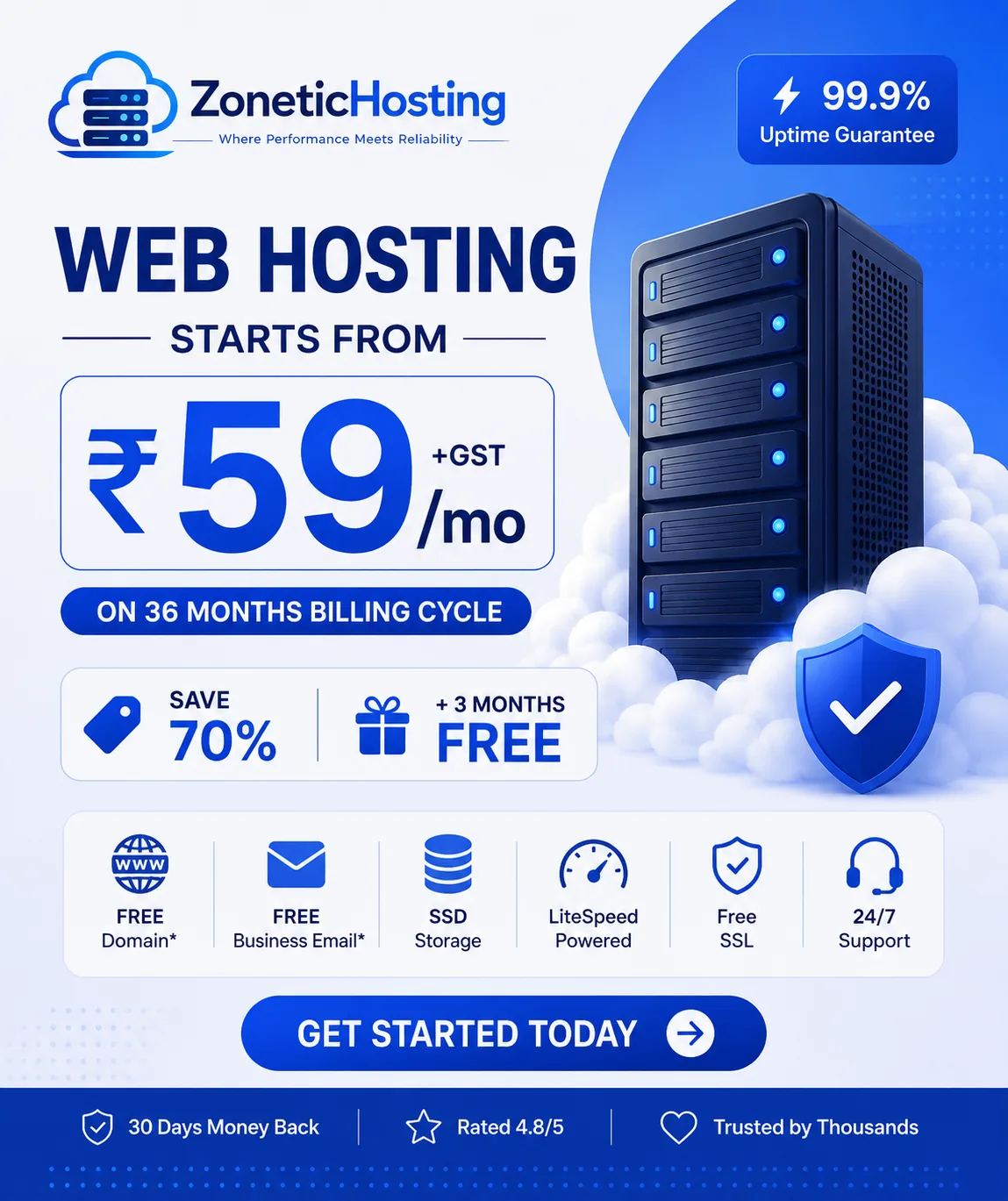
ZoneticHosting offers web hosting plans with free SSL certificates, making it easier for individuals, startups and businesses to secure their websites with HTTPS.
Our web hosting plans are designed for website owners who need essential hosting features, including:
- Free SSL certificates.
- Easy-to-use hosting control panel.
- Website storage and database support.
- Regular backups on supported plans.
- Hosting solutions for personal and business websites.
Whether you are creating a business website, starting a blog or launching an online project, you can explore our affordable web hosting plans to find a suitable solution.
Visit ZoneticHosting to learn more about our hosting services and get your website online.
Frequently Asked Questions (FAQs)
1. Is free SSL as secure as paid SSL?
For encryption, yes. Properly issued free and paid domain-validated SSL certificates can both provide modern TLS encryption. Paid certificates may offer additional validation, support and warranty features.
2. Does free SSL expire?
Yes. Free SSL certificates have a limited validity period and must be renewed. Many hosting platforms support automatic renewal.
3. Do I need paid SSL for an ecommerce website?
Not necessarily. A properly configured free SSL certificate can encrypt website connections. Ecommerce businesses should also use secure payment gateways and follow applicable security and compliance requirements.
4. Does free SSL include HTTPS?
Yes. A properly installed free SSL certificate enables HTTPS by allowing encrypted communication between the visitor's browser and your website.
5. Does paid SSL improve SEO more than free SSL?
No. Google recognises HTTPS as a ranking signal, not the price of your SSL certificate. Free and paid certificates can both enable HTTPS.
6. Can I use free SSL on multiple websites?
Yes, depending on the certificate and hosting configuration. You can issue separate certificates for different domains or use a certificate that supports multiple domain names.
7. Does ZoneticHosting provide free SSL?
Yes. ZoneticHosting web hosting plans include free SSL certificates. You can explore the available plans on our website.
Final Verdict: Free SSL vs Paid SSL – Which One Do You Need?
When comparing free SSL vs paid SSL, the right choice depends on your website's requirements. For most blogs, startups, personal websites and standard business websites, free SSL provides the encryption needed for secure HTTPS connections.
Paid SSL certificates are worth considering when you need additional organisation validation, commercial support, warranty coverage or specific business requirements.
Before spending money on an SSL certificate, understand which features your website actually needs. You can also choose a hosting plan that already includes free SSL to simplify website management.
Ready to launch a secure website? Explore ZoneticHosting web hosting plans and get started with free SSL included.
```
Have a question about hosting?
Our team can help you pick the right plan for your website.